Thursday, March 21, 2013

know Your Musician Series - 30


March - 20 
Josef Franz Wagner (20 March 1856 – 5 June 1908) was an Austrian military bandmaster and composer. He is sometimes known by the sobriquet 'The Austrian March King'.
He is best known for his 1893 march Unterdem Doppeladler or Under the Double Eagle, referring to the double eagle in the coat of arms of Austria-Hungary. The march became a favorite part of the repertoire of American composer and bandleader John Philip Sousa, whose band recorded it three times. The piece was the official regimental march of the Austrian Artillery Regiment Number 2 till its dissolution in 2007.The first one-third part of the March song is featured in the 1992 computer game Great Naval Battles: North Atlantic 1939-1943 when Germany is being selected in the game play.

Wagner's other most popular pieces are the Holzhackerbuam (also known as the Jolly Lumberjack polka). In 1895, his only opera, Der Herzbub, premiered in Vienna. The tune "Under the Double Eagle" was also used for the well known animation segment "Conrad Poohs And His Dancing Teeth" in Monty Python's Flying Circus.

PULL UP YOUR SOCKS TO BE THE BEST PROFILE STUDENT


 The students of grade 5 were putting their reflection on why they are open-minded or risk-takers & on all the profiles as to why they think they are the one. Yearlong students wrote their reflection on profiles they developed not only during their Unit of Inquiry but also during various differentiated tasks given to them. Let me take this honor of saying that our students are the best and exemplar of what the profiles stand for. Our Students are living the learner profile and even competing to become the best profile student of the year.


Wednesday, March 20, 2013

Cas Activity of Grade IX

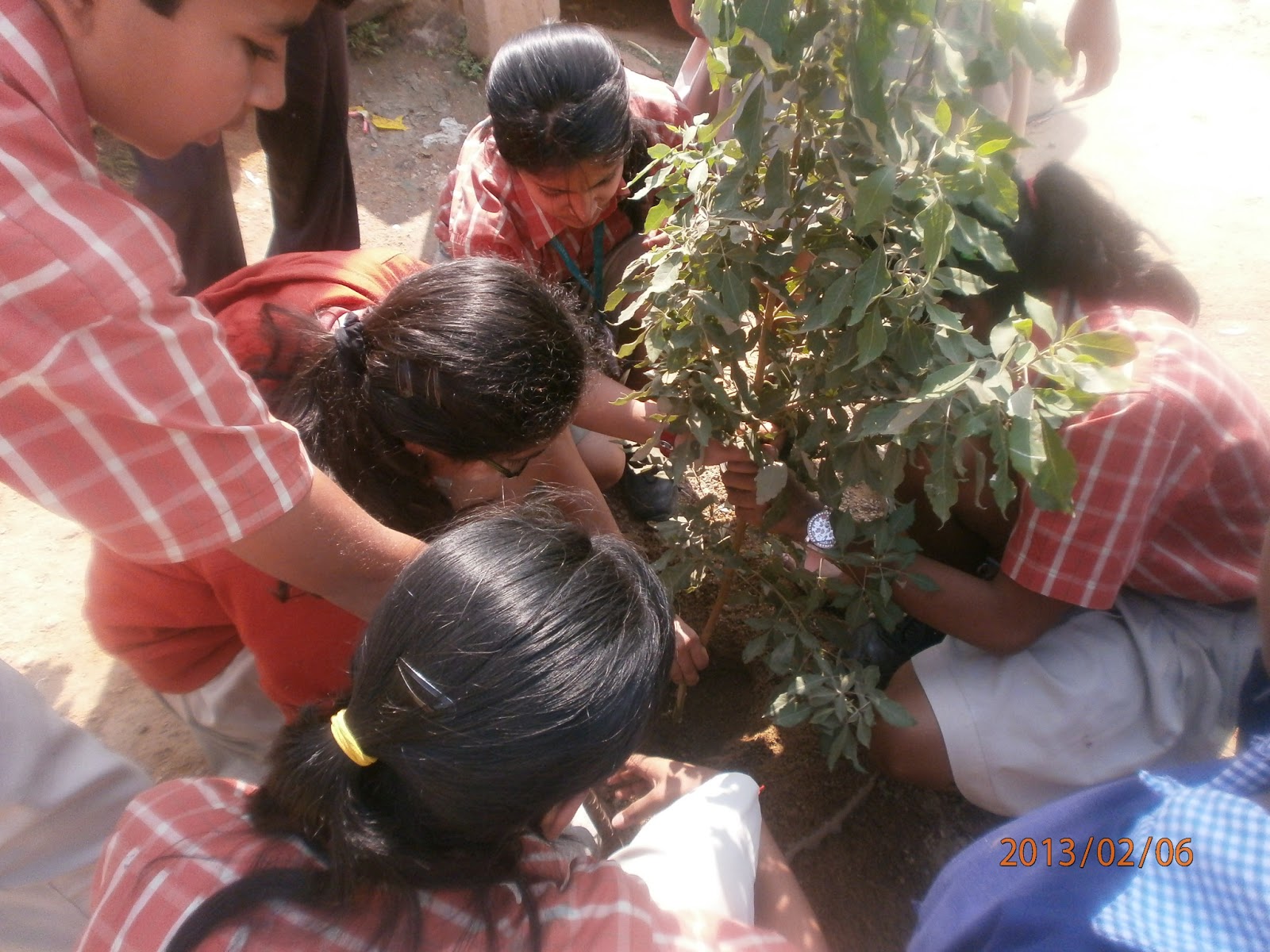
Grade IX students initiated a Plantation Drive at Manikonda Primary School as part of their CAS activity.  


CAS Activity

As part of CAS activity the students of grade IX went for teaching at GOVT primary school in Mainkonda.


Tuesday, March 19, 2013

INTER SECTION GIRLS SOCCER MATCH


The girl’s teams A & D of Grade III had Inter-Section soccer match. They played with enthusiasm and skills. The first section of match came to an end with 0 score and they opted to go for penalty shootout. In the penalty shootout the section D won the match for the score of 2-1.


Field Trip to Apollo Hospitals


On the 13th of March all the biology students of 11th IB went on a field trip to Apollo Hospital in Hyderabad. We went to see how MRI and CT scan work and what they are used to diagnose. This was in relation to our topic Neurobiology and Behavior, which we are studying in school.
On reaching the venue, we were given a brief introduction to the scans by a head doctor. We had a very interactive session and could get most of our queries answered.

We then formed two groups and first went to see how the MRI scans function. We were first shown the machine of the scan, which included a large circular shape, which was the magnet that produces the high radiation and magnetic field for the magnetic resonance. We had to abstain from stepping inside the room as the strong magnetic field and radiation may be harmful. A patient was then taken for the scan to get an image of the hip region to search for any abnormalities. She first lay down on the patient table and then a coil was wrapped around the region to be examined i.e. the hip to get a better image. The table then moved into the magnetic scan and after a few minutes the images appeared on the computer screen in the adjoining room. The images could be manipulated and altered to the required size and proportion. We were then explained about the scan by one of the head doctors. He told us that the magnetic resonance imaging was beneficial in diagnosing various diseases at an early stage. It gave a clear image of many parts of the body to examine. However, it is mainly used for the soft tissues, as the hard tissues would be difficult to reach. It is also used for the non-motion organs of the body as any movement can cause disruption of the image formation. This is also the reason why the patient needs to be extremely still while having the scan.Some patients suffering from claustrophobia may be anesthetized to ensure minimal movement. Also, no metal must be in or around the scanning machine, as it would attract it and cause disruption. When patients with a disability or metal implants or rods in the body need a scan, other imaging techniques are used to prevent harm or disruption.People with pacemakers, ear implants etc. are also not suitable to have an MRI scan. It also takes a long time to complete and is quite expensive.
Next we went to see how the CT scans function. We were first shown the machine and while it was similar to the MRI it had a less strong magnetic field but had high radiation. It had two detectors on the top to detect the part of the body and produce an image. However, the CT did not require a coil around the body. It is more suitable to view the hard tissues of the body. It can also produce images of tissues in motion such as the heart or peristalsis in the stomach. There were two types of images produced – normal and highly computed. We saw the scan of a woman’s abdomen. The normal scan just showed the organs like liver and kidney, and their position. The computed scan was more clear as it showed images of the organ with the blood vessels and also showed the abnormalities. The CT takes a shorter time to complete but is also quite expensive.
We were then given a handout about both the imaging techniques and also clarified any further questions we had. It was a learning experience and we gained a lot of knowledge.

Monday, March 18, 2013

Indian Folk Music Series - 4


Bhavageet

Bhavageet (literally 'emotion poetry') is a form of expressionist poetry and light music. Most of the poetry sung in this genre pertains to subjects like love, nature, philosophy etc., and the genre itself is not much different from Ghazals, though ghazals are bound to a peculiar metre. This genre is quite popular in many parts of India, notably in Karnataka and Maharashtra. 

This genre may be called by different names in other languages.KannadaBhavageete draws from modern Kannada poetry. Notable modern Kannada poets whose works have been set to music include Kuvempu, D. R. Bendre, GopalakrishnaAdiga, K.S. Narasimhaswamy, G.S. Shivarudrappa, K. S. Nissar Ahmed, and N S LakshminarayanaBhatta. 

Notable Bhavageete performers include P. KalingaRao, Mysore Ananthaswamy, C. Aswath, Padma Charan, H.K.Narayan, BalappaHukkeri, SangeethaKatti, H R Leelavathi, Sulochana, ShimogaSubbanna,RatnamalaPrakash, ArchanaUdupa, RajuAnanthaswami, Ravi Murur, and M D PallaviArun.